


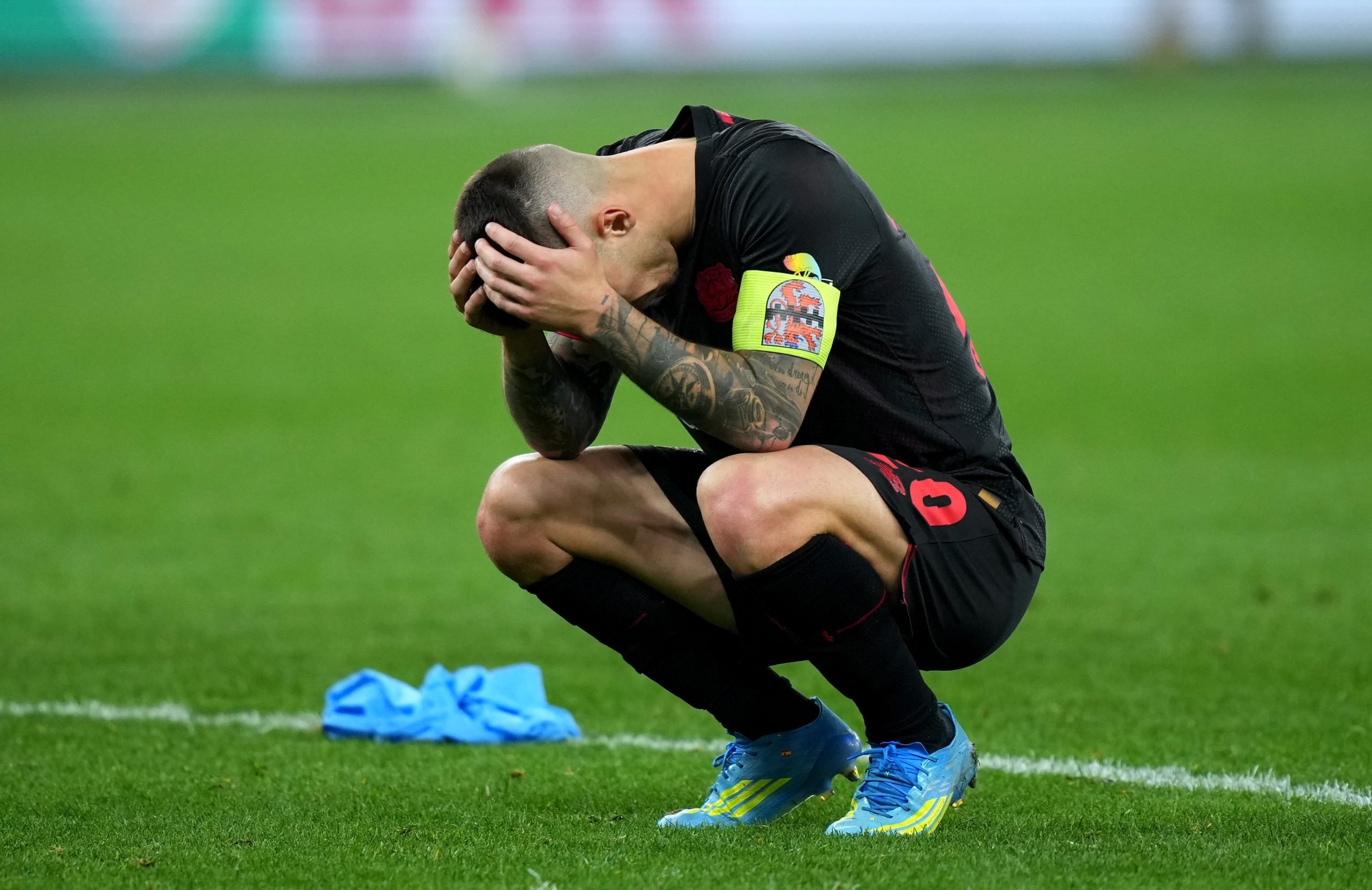
Bayer Leverkusen’s 2023/24 Bundesliga title-winning campaign under Xabi Alonso looked like the beginning of a new era. The club completed an unbeaten domestic season, played some of the most fluid football in Europe and appeared positioned to challenge Bayern Munich consistently for years to come. Two seasons later, however, the picture looks very different.
Under Alonso, Leverkusen combined tactical flexibility with defensive control and elite transition play. Florian Wirtz became the creative focal point, Granit Xhaka brought structure in midfield and the back three system gave the side balance both in possession and out of it. They conceded the fewest goals in the Bundesliga in 2023/24 while also maintaining one of the league’s best attacking records. More importantly, there was clarity in every phase of play.
The decline did not happen immediately, but signs gradually emerged after the title-winning campaign. Squad turnover weakened the balance of the team, while maintaining the same emotional and tactical intensity became increasingly difficult. By the start of the 2025/26 season, Leverkusen no longer looked like the relentlessly efficient side that had dominated German football two years earlier.
Why the Erik ten Hag appointment failed
Leverkusen’s decision to appoint Erik ten Hag following Alonso’s departure was intended to preserve a possession-based identity, but the transition never fully worked. Ten Hag attempted to impose a more rigid positional structure, yet the squad appeared less suited to the demands of his system than Alonso’s more adaptive approach.
Performances became inconsistent and the defensive solidity that once defined Leverkusen faded. The team often controlled possession without creating the same level of danger, while transitions against them became increasingly problematic. Results reflected that decline, and the project gradually lost momentum.
Hjulmand stabilises a difficult situation
In difficult circumstances, Kasper Hjulmand deserves credit for restoring a degree of stability. Taking over during a turbulent period, he inherited a squad lacking confidence and direction. While performances have not returned to the level seen under Alonso, Leverkusen have looked more organised and competitive since the change.
Hjulmand has simplified aspects of the team’s structure, focusing on defensive balance and collective discipline rather than tactical complexity. That approach, despite missing out on Champions League football for the upcoming season, has at least steadied the situation and prevented the season from deteriorating further.
What comes next?
Leverkusen now face a defining decision about the future direction of the club. The challenge is no longer replacing Alonso directly, but rebuilding a clear identity capable of competing at the top of the Bundesliga again.
Sebastian Hoeneß would be one strong managerial option. His work at Stuttgart has shown an ability to combine structured positional play with attacking intensity, while also developing younger players and maintaining tactical flexibility. His teams play with clarity and aggression without losing balance, qualities that defined Leverkusen at their peak under Alonso.
Andoni Iraola would have been the breath of fresh air that Leverkusen so desperately need, but the Spaniard appears destined for Liverpool following the sacking of Arne Slot. As of now, Die Werkself’s top candidate appears to be Oliver Glasner, who has experience of coaching in the Bundesliga, and most recently lifted the UEFA Conference League with Crystal Palace, but Rolfes and Carro will have to move quickly with Milan also interested.
Another interesting alternative is Filipe Luís, who is also being courted by Ligue 1 side AS Monaco. The former Atlético Madrid and Chelsea defender has quickly earned praise for his tactical ideas and leadership in Brazil. His footballing background under Diego Simeone, combined with a modern understanding of positional play and defensive organisation, could fit Leverkusen’s need for structure and intensity. While appointing him would involve risk due to his limited experience at the highest European level, Leverkusen previously showed with Alonso that bold coaching appointments can produce major rewards.
Leverkusen’s rise under Alonso proved that sustainable success was possible outside Bayern Munich’s dominance. The task now is ensuring that period is remembered as the beginning of a long-term project rather than a brief peak that quickly faded.