


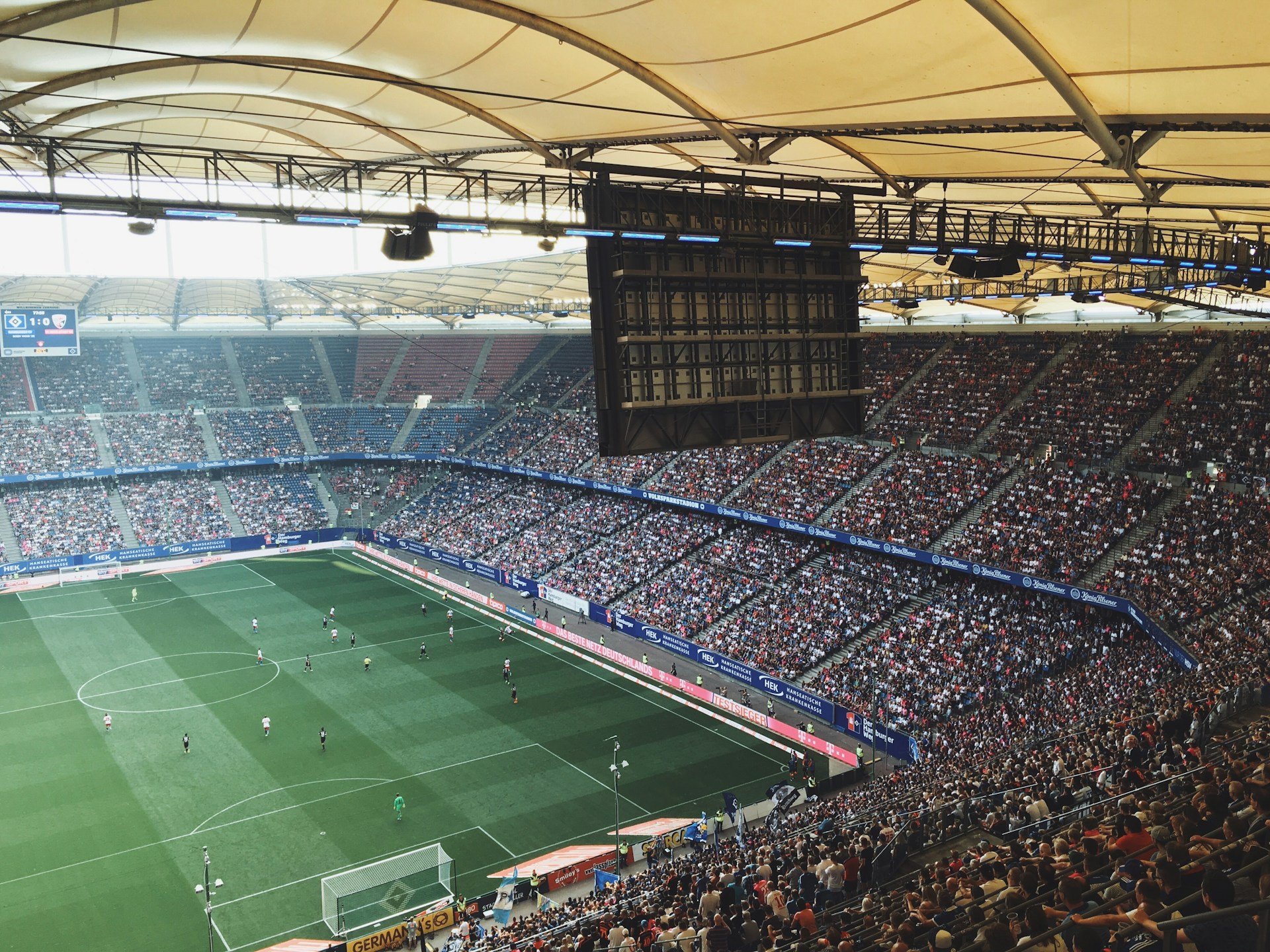
English-speaking fans who have followed both the Bundesliga and the Premier League tend to describe the two match-day experiences in different terms. One sits inside a community ritual. The other sits inside a weekend leisure landscape.
The structural differences between the two leagues have been covered at length. What gets covered less often is how those structural differences actually feel on a Saturday afternoon from the terrace, the concourse, and the walk back to the station.
Ticket Pricing and the Stehplatz Culture
The single most visible difference is standing. Bundesliga grounds retain large standing sections, with Borussia Dortmund’s Südtribüne the most famous at around 25,000 standing places on a matchday. The Premier League has had all-seater stadiums as the regulatory default since the early 1990s, with a limited safe-standing pilot more recently.
Standing changes the price point. A Bundesliga Stehplatz ticket at most clubs sits in the single-digit to low double-digit euros for domestic league fixtures, which is a different order of magnitude from the typical Premier League matchday ticket. The pricing is not a quirk. It is a deliberate feature of how the 50+1 ownership structure prioritises matchday affordability.
Season-ticket renewals in the Bundesliga sit near-saturation across most clubs, with waiting lists running into the thousands at the biggest grounds. Per-match attendance figures remain the highest of any top-flight European league, which is one of the clearer measures of how deeply embedded the Saturday ritual is. The combination of low prices and standing capacity produces a different kind of weekly ritual from the one most Premier League grounds now offer.
Pre-Match Choreography and Ultras Culture
The pre-match hour inside a Bundesliga ground looks and sounds different from a Premier League equivalent. Ultras groups coordinate choreographies, tifo displays, and sustained chanting from fixed sections of the ground, and the collective result shapes the atmosphere from kickoff through to the final whistle.
The Premier League has active supporter groups at most clubs, but the choreographic tradition is less visible. The all-seater stadium requirement limits the physical staging of coordinated displays. The commercial focus on broadcast-friendly presentation also leaves less room for the sustained Ultras-style continuous support that defines a Bundesliga Südtribüne.
The German tradition is not without its tensions. Pyrotechnics, political banners, and league disputes over fan-group access have produced recurring debates between clubs, Ultras, and the DFL. These tensions are part of the match-day texture rather than a sign that the culture is breaking down.
Half-Time Rituals and the Beer-and-Bratwurst Habit
Half-time inside a Bundesliga ground tends to centre on the concourses, which are built with fan movement in mind. Beer and bratwurst remain the standard concourse purchase, and the UK prohibition on alcohol in sight of the pitch simply does not apply in Germany. Fans can carry beer to the standing section itself.
The Premier League concourse experience is more constrained. The Sporting Events (Control of Alcohol) Act 1985 prohibits consumption of alcohol within sight of the pitch at designated grounds. The practical result is that Premier League matchday drinking happens either before the gates or in enclosed concourse areas away from the stands. Half-time becomes a different kind of ritual as a result.
The food is also different in character. Bratwurst, currywurst, and Fassbrause carry the Bundesliga concourse experience, while the Premier League concourse menu has shifted toward branded quick-service options in most newer builds. Neither tradition is inherently better, but they produce different sensory memories for anyone who has sat in both.
Post-Match Community and the Pub Question
The post-match hour is where the two cultures diverge most clearly. German supporters tend to linger inside and around the ground, with pub culture less central to the full match-day ritual than it is in Britain. The train ride home is often where supporter conversation continues, with regional train networks around Dortmund, Munich, Berlin, and Hamburg built for post-match crowds.
The British post-match ritual is pub-centred. The pre-match pub, the half-time pub stop in some towns, and the post-match pub debrief are a fixed part of the English weekend football experience. British football culture sits inside a wider weekend leisure landscape where supporters play online bingo, visit the pub, or back a Saturday coupon alongside watching the match. The German ritual is tighter around the ground itself, with the match sitting as the primary rather than the parallel event.
Neither pattern is universal. Hamburg, Bremen, and the Rhein-Ruhr clubs have strong post-match pub cultures of their own, and English clubs with large standing-era traditions still carry a stronger ground-centred ritual than the modern Premier League norm. But the overall balance between ground-ritual and parallel-leisure differs between the two countries in a way that is hard to miss once you have attended both.
Why the Difference Matters for the English-Speaking Audience Watching Both
The structural comparison matters because it explains why so many English-speaking fans end up following both leagues. The Premier League offers the elite talent concentration and the broadcast polish. The Bundesliga offers a weekend ritual that feels closer to how English football felt before the full commercial reshape of the 1990s.
Features and match analysis in the broader Bundesliga coverage that English-language audiences follow often circle back to this cultural dimension. The tactics and transfer stories carry on their own merits. The match-day texture is what keeps a sizeable British and international audience watching German football week after week rather than treating it as a secondary league.
The two cultures do not need to be ranked against each other. They are the product of different ownership structures, different regulatory histories, and different relationships between the match and the surrounding leisure landscape. Understanding why they diverge is useful whether you follow one league or both.