


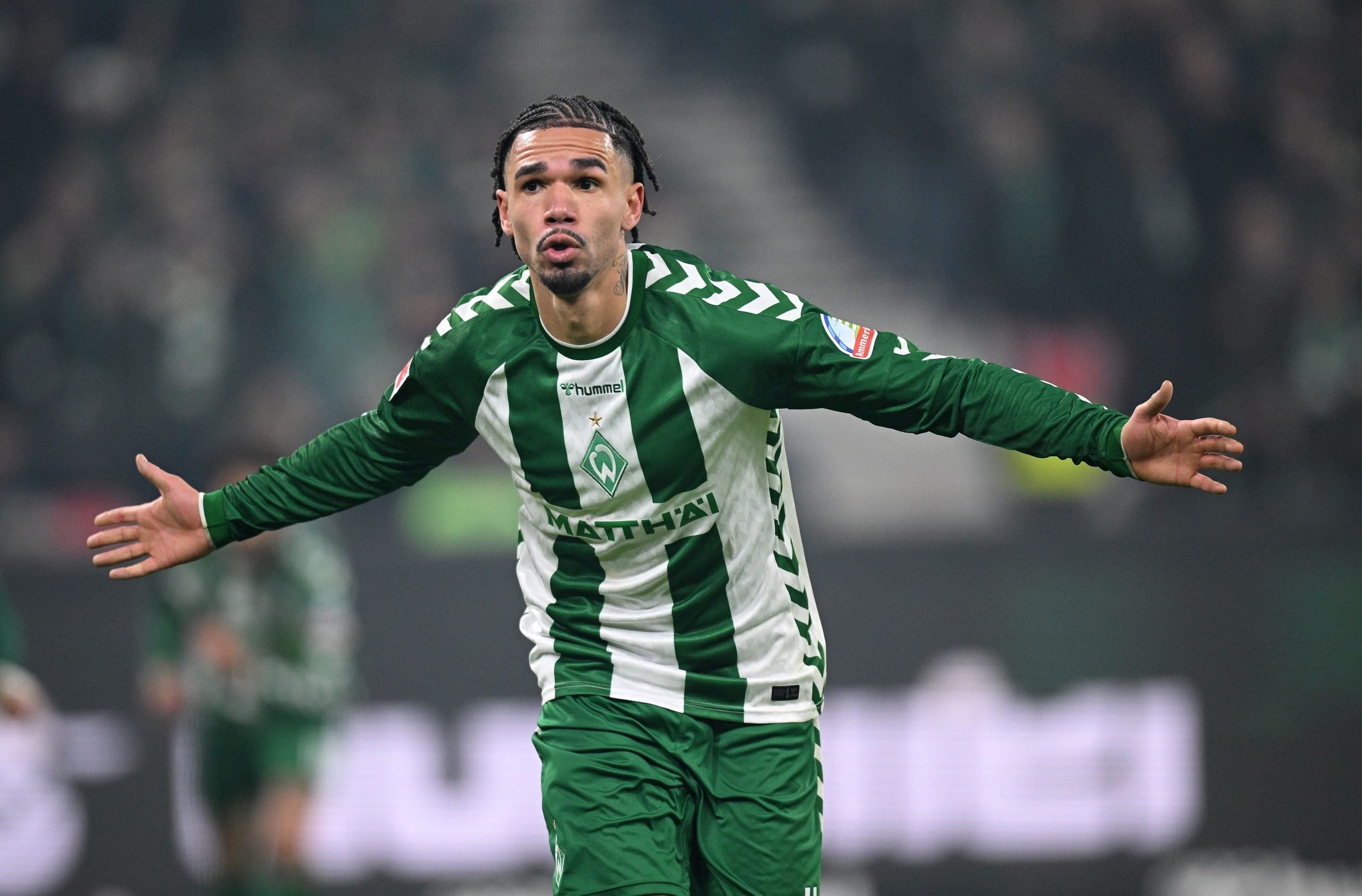
Werder Bremen is the best team in northern Germany. At least that is what was evident from last weekend’s Nordderby, when they successfully beat Hamburg 4–0 at the Weserstadion.
Bremen did more than just win that game; they demonstrated their quality this season and their ability to maximise the potential of their players to become a highly efficient team.
This is the issue: The underlying numbers, in this case expected goals (xG), indicate that the game was actually very close – not as one-sided as the result suggests. HSV even had 1.54 compared to Bremen’s 1.52 in front of xG, per Opta.
So, being able to win by a four-goal margin despite losing on xG shows just how effective Bremen are as a team. Get German Football News’ Bergas investigates why…
First thing first: Underlying numbers need context
Yes, HSV has more numbers in front of xG. However, if we look at the xG data itself, 1.03 of HSV’s 1.54 came after they fell behind in the 55th minute. In this situation, the state of the game changed, with HSV adopting a more proactive approach with the ball.
Meanwhile, between minutes 1 and 54, when the score was still 0–0, HSV only achieved an xG of 0.5 (Bremen had 0.84). This is why xG is not the best metric with which to measure HSV’s performance in this game, because the state of the game forced them to create more chances in order to catch up, resulting in lots of shots. In fact, however, they weren’t really dangerous enough to challenge or harm Bremen.
Looking at other metrics such as key passes, HSV weren’t superior either during the even time when the score was still 0–0. In that period, they made four key passes compared to Bremen’s eight. HSV found it much harder to create shots than the home team. Even in the first half, when Bremen were underperforming in parts, HSV didn’t look particularly threatening.
Bremen flexible defensive structure made HSV toothless
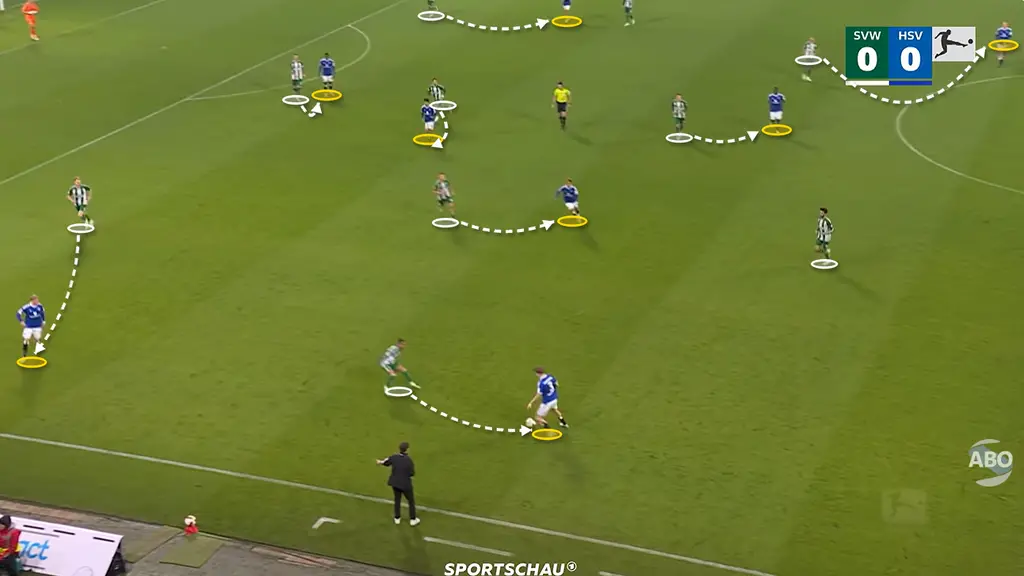
One of the reasons for that is Bremen’s flexibility in their approach to HSV when defending. In the first half, they often used a man-to-man approach (which was more aggressive), which successfully forced HSV to use long balls to progress the ball to the final third, particularly on their left side.
In this long-ball scenario, Bremen also had the advantage when it came to closing down HSV attacks. The problem for Bremen arose when HSV successfully won the second ball, creating a situation in which Amos Pieper had to defend one-on-one against the opponent.
Pieper struggled in the early stages of the game against HSV’s pacey attackers and received a yellow card in the first half, but played safely for the rest of the game and successfully avoided another red card. This was also thanks to Bremen’s improved defensive structure in the second half. They were not as aggressive as before, but rather kept their double six close to their defensive line. With this defensive structure, HSV were unable to find the free space in front of Bremen’s defensive line that they had exploited in the first half.
Even if HSV were able to progress, Bremen’s man-to-man marking prevented them from being exploited by HSV’s overload, which they usually created through asymmetrical or free movement by their players. With every player having their own marker, that situation was difficult to create.
Directness and quality help Bremen win the game
One noticeable development from Werder Bremen this season is their flexibility with the ball. Bremen can be a team that dominates possession, but they can also be very dangerous when they need to play directly. This Nordderby is a perfect example of that.
In the minute before their second goal, Bremen only made two passes. Before the fourth goal? Only three. They can score with short sequences because they are very effective. The Bremen players really know how to make direct passes forward and progressive runs to enter the final third as quickly as possible. They don’t like to slow things down unnecessarily.
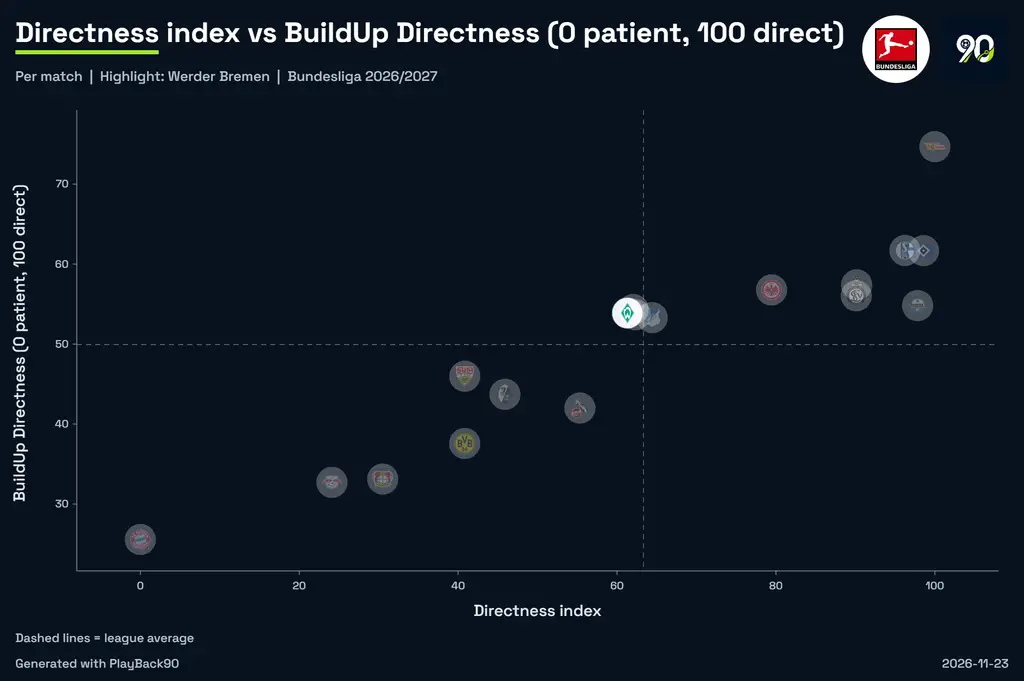
This behaviour is exemplified by players such as Justin Njinmah, Marco Grüll, Eren Dinkçi, Mitchell Weiser and Niclas Füllkrug, who excel in direct situations. Füllkrug is special because he knows many ways to score a goal, which has made Bremen more effective this season.
Bremen fans will be hoping that this form is sustainable for the rest of the season. While they have been flexible in terms of their attacking style and have been able to be efficient thanks to the quality of their players, at some point this season they may need a consistent pattern of attacks to help them create big chances.
Hamburg need more initiative
It is clear from this game that HSV need their attackers to show more initiative in the final third. Of all the starters, only Albert Grønbæk consistently tries to create chances in the final third. He made some dribbles to try to break Bremen’s defensive structure and attempted some passes. However, one player is not enough.
Fabio Vieira came on in the second half, but it was too late to help HSV elevate their game. This was made worse by the fact that their top scorer, Miro Muheim, was injured early in the first half. Without their top creators and scorers, HSV practically didn’t have any much ideas in the game.
This problem is not new. Spectacular goals from outside the box in previous games may have obscured this. However, to survive from game to game, HSV needs more than that. They need a consistent and sustainable plan in the final third to help them create chances, as well as more initiative from their players to take risks and do more than just shoot from outside the box.
GGFN | Bergas – reporting from the Weserstadion