


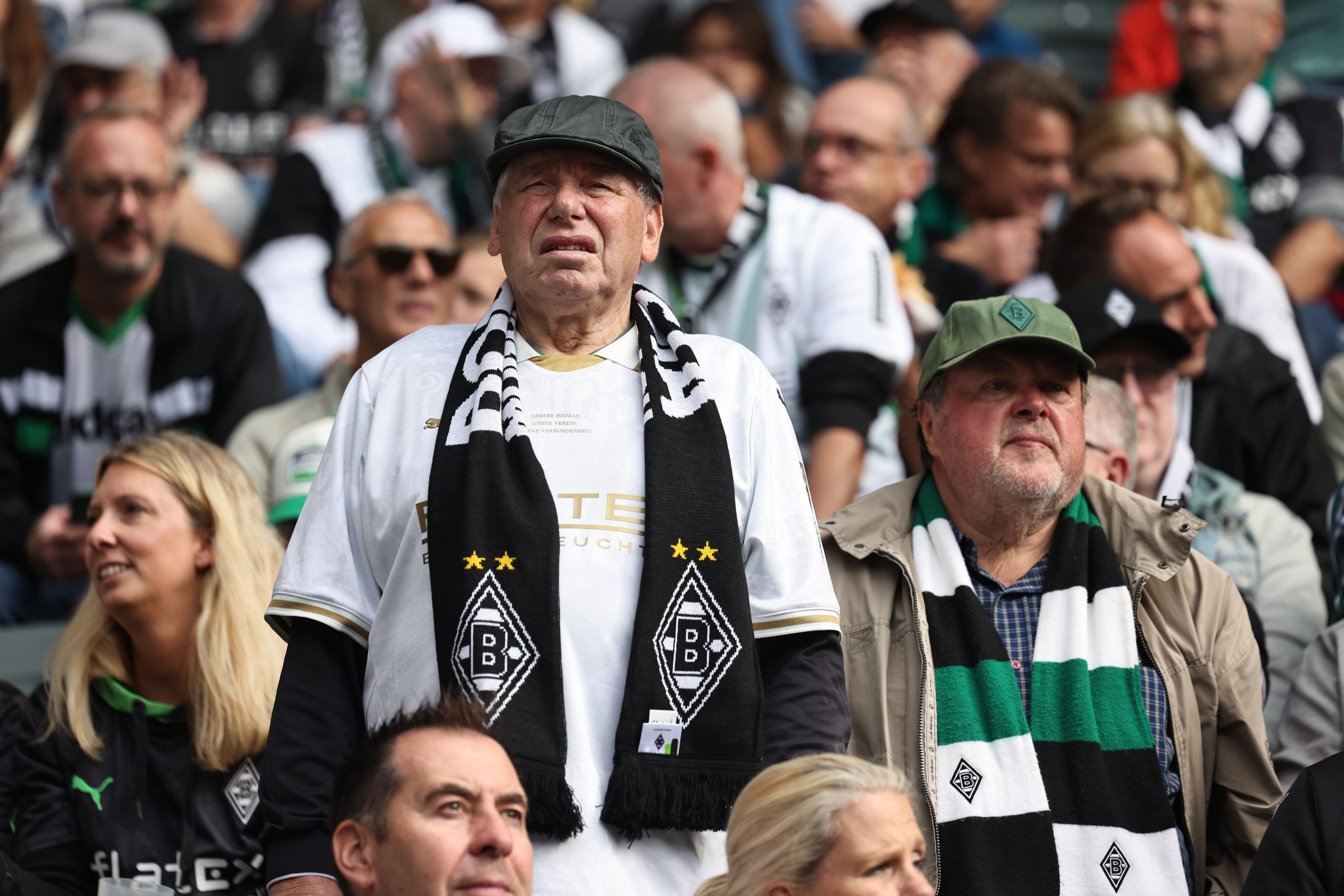
Borussia Mönchengladbach’s latest defeat offered little respite from the disastrous start that has left the club rooted to the bottom of the Bundesliga table. Interim trainer Jan-Moritz Lichte nevertheless managed to leave Eugen Polanski’s permanent successor with considerably more to think about than might have been expected from a one-match assignment.
Gladbach’s 3-4 home loss to Mainz 05 featured many of the defensive deficiencies that ultimately cost Polanski his job. Borussia conceded four more goals, repeatedly struggled to defend their own penalty area and remain pointless after four league fixtures. Lichte’s tactical and personnel decisions nevertheless represented a surprisingly substantial departure from the structure Gladbach spent the entire summer attempting to establish.
Most notably, the interim trainer immediately abandoned the back-four system that had effectively been mandated by the front office.
Lichte moves away from Gladbach’s mandated back four
When sporting director Rouven Schröder elected to retain Polanski following last season’s relegation battle, the decision came with significant structural changes. As extensively documented in GGFN’s 2026/27 Borussia Mönchengladbach tactical preview, Schröder reshaped Polanski’s coaching staff, reinforced the squad and instructed the young trainer to move away from the back-three systems used during much of the previous campaign.
The new-look Gladbach consequently spent pre-season working primarily in 4-2-3-1 and 4-3-3 formations. The reset initially looked promising, but three successive Bundesliga defeats ultimately brought Polanski’s tenure to an abrupt end. Whatever remained of the summer tactical directive following Polanski’s dismissal clearly did not constrain Lichte.
The 46-year-old instead deployed Kevin Diks, Jan Leszczynski and Ko Itakura in a three-man defensive line against Mainz. Joe Scally and Lukas Ullrich operated much higher on the flanks, with Philipp Sander and Florian Neuhaus working centrally behind Franck Honorat, Hugo Bolin and lead striker Isac Lidberg. The result was hardly a defensive success, but Gladbach did produce considerably more attacking thrust.
Ullrich’s advanced deployment proved particularly productive. The Germany U21 international supplied the initial shot Neuhaus redirected home for the 1-0 and later beat Anthony Caci before crossing for Lidberg’s 59th-minute equalizer. Scally also participated in the buildup to the second goal.
Gladbach finished with 21 shots and an xG total of 3.36. Kevin Diks additionally struck the post from the penalty spot while Borussia continued creating chances deep into second-half stoppage time. Lichte suggested afterwards that much of the tactical plan had actually worked.
“Those are the questions the next coach should answer after watching this game,” Lichte answered when asked about his tactical changes and implementations. “For me, there was a lot that worked precisely as I had envisioned it. The analytics department delivered us a good package on Mainz 05.
“I think we were well prepared and knew what was going to happen and our players implemented them largely well for long stretches,” Lichte continued. “We ended up getting scored on, but not in the way we thought we would.”
Florian Neuhaus gets a surprise start
No personnel decision illustrated Lichte’s willingness to reassess the existing hierarchy better than the return of Florian Neuhaus. The 29-year-old had recently fallen completely out of contention before Polanski’s dismissal. Neuhaus logged only 43 total minutes as a substitute over the course of last season’s final 13 matchdays. Prior to Saturday, the 10-times-capped Germany international hadn’t made a single competitive appearance and only made his first matchday squad last week.
Lichte proceeded to bring the former German international directly from the stands into the starting XI. Neuhaus partnered Sander in central midfield and needed only 11 minutes to justify the gamble, first helping initiate the attacking sequence on the left before getting the decisive touch on Ullrich’s shot. He remained heavily involved thereafter.
Neuhaus supplied Bolin for another first-half opportunity and came close with a powerful long-range effort shortly before Gladbach’s second goal. He received applause from the Borussia-Park crowd when Wael Mohya replaced him in the 64th minute.
“The reasoning behind Flo’s appearance was that we as a coaching team surveyed our options,” Lichte said when asked about the decision. “And decided Flo was the right player for the situation we’re in and the system we wanted to use.
“Of course, it was nice for us that he scored the 1-0,” Lichte continued. “And he got into the game well. He implemented a lot of what we wanted from him and I’m very satisfied with him.”
Lichte leaves next Gladbach coach with some ideas
None of this changes the fact that Gladbach conceded another four goals. The return to a back three did not eliminate the organizational problems that plagued Polanski before his dismissal. Mainz equalized after catching Borussia badly arranged following a simple throw-in. Eric Martel later restored the visitors’ lead following another poorly defended set-piece sequence. Danny da Costa’s eventual 4-2 again came after Gladbach failed to properly clear an Amiri corner.
Lichte, knowing full well that this would be his only BMG press conference, understandably declined to provide an extensive diagnosis immediately after full-time. He will not be afforded the opportunity to develop any of these ideas himself. Gladbach sporting director Rouven Schröder confirmed before the Mainz match that the club’s search for a permanent successor to Polanski is nearing its conclusion and that a preferred candidate has now emerged.
Schröder declined to identify the coach, but ruled out Christian Titz and Horst Steffen, while Kicker reports that former Cologne trainer Lukas Kwasniok is also not under consideration. Gladbach are instead looking for an experienced coach who has already demonstrated an ability to handle difficult situations and the pressure accompanying a traditional club with significant expectations.
“The best excuse is always that I haven’t looked at it yet,” Lichte said when asked about the goals conceded. “It’s actually not an excuse at all. I’ve just not taken a proper look yet. For some reason, the fourth goal is fresh in my head. We just weren’t organized. The opponent won the duels. When one loses duels in the box, the chances that you’ll concede a goal are greater.”
The defensive work therefore remains obvious, particularly inside Gladbach’s own penalty area. Lichte nevertheless leaves behind more than another defeat.
One of the interim trainer’s main objectives had been changing Borussia’s response to setbacks after the team repeatedly collapsed following adverse moments during the opening three matchdays. That changed against Mainz. Gladbach responded to Diks’ missed penalty by equalizing two minutes later and continued pushing even after falling 4-2 behind.
There were tactical ideas as well. The return to a back three generated considerably more attacking activity, Ullrich looked dangerous from a higher starting position, Hugo Bolin operated somewhat deeper, Scally worked an interesting semi-midfield role. Neuhaus immediately demonstrated that his exclusion need not be permanent.
None of those adjustments solved Gladbach’s problems. They did, however, provide the incoming coach with something tangible to work with.
As Lichte himself put it, those are now questions for the next coach to answer.